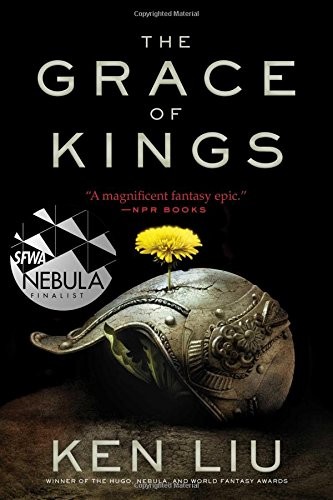
I knew Ken Liu from his short fiction first, the way a lot of people did, so I went into his debut novel expecting the same precision at a much bigger scale. What I got instead was something closer to a chronicle than a novel, and it took me a hundred pages to stop fighting that and just let it be what it is.
Here’s the thing people keep saying, and it’s true: this reads like history, not like a story being told to you scene by scene. There’s a vast cast, kings and blacksmiths and pirates rising and falling across the archipelago of Dara, and the narration keeps a kind of documentary distance even during the parts that should feel intimate. I’ve seen it called “kind of like Game of Thrones except Asian-influenced” as a joke summary and honestly that’s not wrong, it just undersells how deliberately Liu is doing something different with the form, not just the setting.
Kuni and Mata are the two you actually attach to, a wily commoner and a proud, doomed warrior, and their arc together is the emotional spine holding up all that expository weight. Where the book earns its length is in the aftermath of rebellion more than the rebellion itself, what you do once you’ve actually won and have to govern people instead of just inspire them. That’s a more interesting question than most epic fantasy bothers asking.
It does bog down. The worldbuilding-as-history approach means long stretches where you’re being told about events rather than experiencing them, and I won’t pretend that never got tiring, especially early on before I’d learned who to care about. But by the last third I was fully in it, and the ending genuinely surprised me in a way big fantasy rarely manages anymore.
Four stars, with the caveat that if you need a tight, scene-driven plot from page one, this isn’t going to convert you. If you can sit with a slower burn, it pays off.