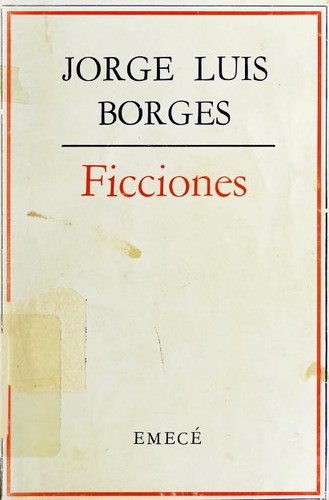
This is not a book of stories in the conventional sense, more like a series of thought experiments wearing the costume of short fiction. No real beginnings, middles, or ends most of the time, closer to Borges sitting at a typewriter working out an idea to its logical, often unsettling conclusion and stopping the moment he’s done.
I enjoyed roughly half the collection outright. “The Garden of Forking Paths” is the one everyone talks about and deserves it, a spy story that’s also a meditation on branching time that predates a lot of what people now call multiverse fiction by decades. “Funes, the Memorious,” about a man who forgets nothing, functions almost as an accidental rebuttal to perfect memory as a gift, which made an odd pairing in my head with the last book I’d read, where the narrator also claimed perfect recall and used it as a kind of shield.
The other half asked more of me than I had to give, honestly. Some of these require a working knowledge of nineteenth and twentieth century philosophy and literature to fully land, and I don’t have that, so a handful of the pieces landed as pure texture rather than argument, beautiful sentences I couldn’t fully unpack. I don’t think that’s a flaw exactly, some art is allowed to exceed its reader, but it did mean I finished this slower than the page count suggests.
“Death and the Compass” and “The Form of the Sword” were the two that surprised me most, tighter and more plot-forward than I expected from the collection’s reputation, proof Borges could do conventional narrative tension when he wanted to and chose not to most of the time.
Four stars. This rewards rereading more than almost anything else on my shelf, and I fully expect to get more out of it in five years than I did this time through.