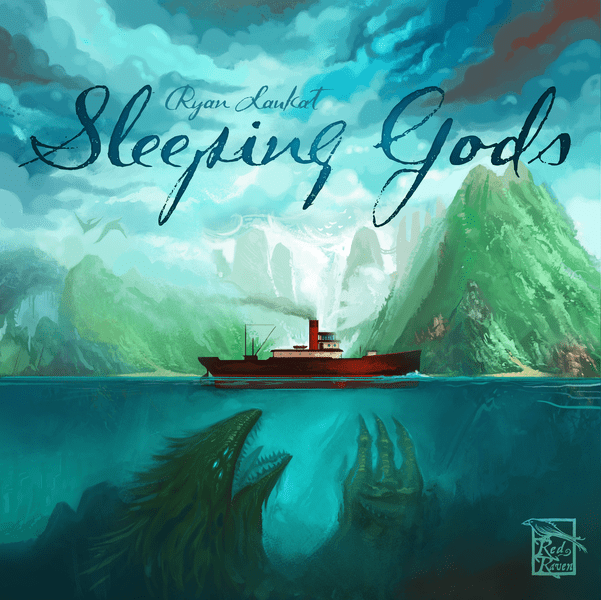
I backed this on Kickstarter the day it went live, no research, just “new Ryan Laukat” was enough. Fulfillment slipped from the original May 2020 estimate to September, then to a vague “sometime later,” and mine finally showed up in February 2021. Nine months late is annoying in the abstract and completely forgotten the moment you open the book-shaped map for the first time.
Because that’s the trick here, the map is literally a book, you flip through it like reading a story, and the whole game is built around chasing narrative threads across a fantasy sea instead of optimizing an engine. The box claims 1 to 20 hours per session and that’s not a real number, one campaign runs something like 50-plus turns across an 18-card event deck, closer to 5 to 8 hours in practice, and there’s no natural stopping point so you’re saving your place mid-adventure like a bookmark.
Two-player is where I’ve put almost all my time with this, and it holds up, though you end up controlling most of the same 9 crew members regardless of headcount, which can feel like too many hats to juggle at lower counts. Teaching it takes maybe twenty minutes to get moving, the rulebook itself is a beastly tome that oversells the complexity, once you’re actually playing the core loop clicks fast.
The fatigue-and-recovery resource loop is the one mechanic I’ve seen split people hard, it echoes 7th Continent’s food-management loop closely enough that if that annoyed you there, it might here too. I don’t mind it. Combat, when it happens, is a genuinely clever little puzzle, though it’s rarer than I expected and mostly something to avoid rather than seek out.
Five stars. It unseated Gloomhaven as my go-to campaign game because the story actually feels load-bearing here instead of a justification tacked onto a combat engine.